

Matt Murphy says open-source models will not displace Anthropic and AI outliers have reset venture investing
- Capital, Markets, And Business Models
- Frontier Models And Capabilities
- Open Models
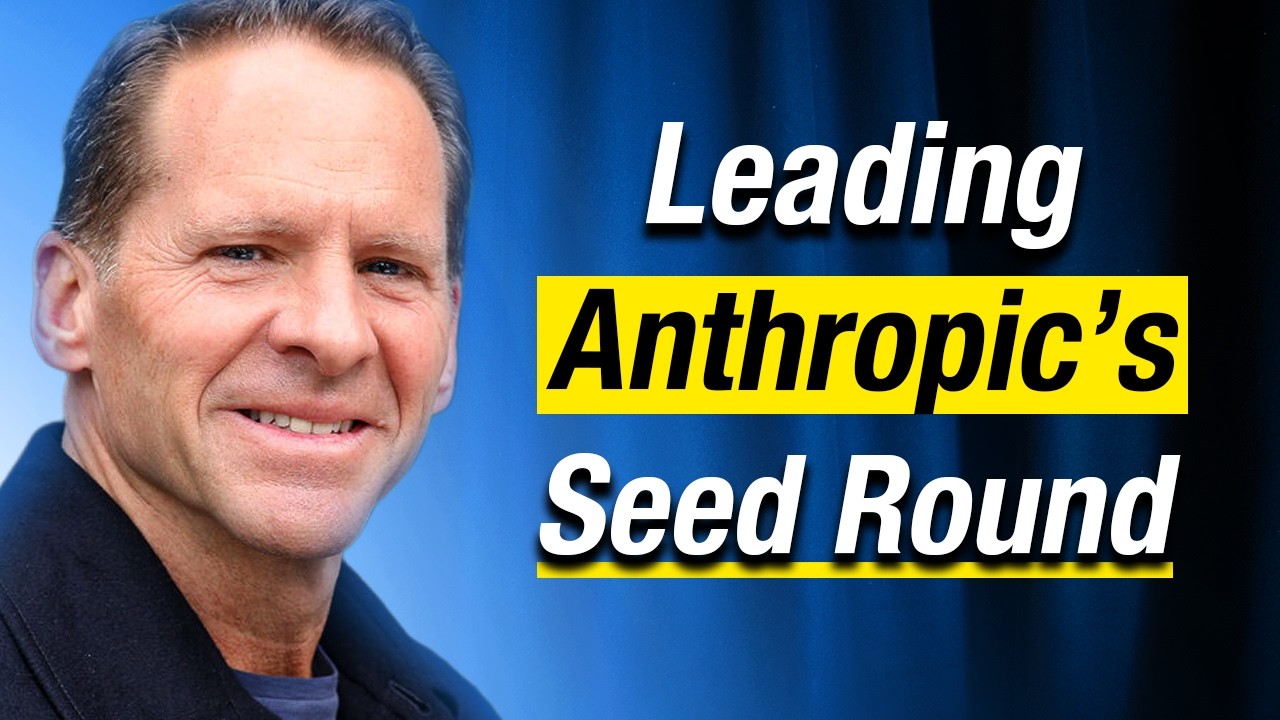
But we were like, we have to be in this market. We're building the firm around AI, and this is absolutely the best company. So, just don't overthink it and get in.
Audio recap
Listen to this recap
Matt Murphy came to Menlo Ventures in 2015 after 15 years at Kleiner Perkins. There, he was a Google board observer from the firm's initial investment through the IPO, launched the $200 million Apple-backed iFund, sourced DocuSign, and led investments including AppDynamics, which Cisco acquired for $3.7 billion, and Shazam, which Apple acquired. That history matters here: Murphy's career has repeatedly put him at the point where a new computing platform creates both an infrastructure layer and a new class of applications. At Menlo, he now invests across both sides of that divide. (Menlo profile)
Menlo's current $3 billion platform formalizes the approach. Menlo Ventures XVII invests from seed through Series A, while Menlo Inflection IV supplies growth capital from Series B onward. Anthropic became the anchor for both the strategy and this interview. Murphy led Menlo's first investment in 2023, when Anthropic was pre-product and pre-revenue; Menlo later led its Series D with the largest check in the firm's history and says it has invested in every subsequent round. Menlo's stated reasons were the technical depth of Dario Amodei's team, the belief that the market could support another independent foundation-model company, and the view into infrastructure and applications that came with being close to the model layer. The relationship also produced the $100 million Anthology Fund for early-stage AI companies. (Menlo's fund and Anthropic history, Anthropic's Anthology Fund announcement)
The other major investments discussed by Harry Stebbings fit that map rather than forming a random portfolio list. Menlo led OpenRouter's $40 million Series A after first backing it through the Anthology Fund because developers need one place to trade off model performance, price, latency, and provider capacity. It co-led Lovable's $330 million Series B on the thesis that natural language can expand software creation beyond professional programmers. It also joined Legora's $550 million Series D because legal work is high-context and trust-dependent, leaving room for a purpose-built workflow product above the foundation models. The episode uses these bets to examine ownership, margins, open-source competition, and how AI outliers have changed Menlo's fund strategy. (OpenRouter, Lovable, Legora)
Menlo invested in Anthropic before product launch and relaxed its ownership target
Section 01A former colleague introduced Murphy to Dario Amodei and Tom Brown in 2023. Anthropic was pre-revenue, had not launched its model, and carried a valuation above $4 billion. That did not fit Menlo's normal venture or growth sizing.
Menlo invested just over $10 million. It dropped the requirement for 15% or 20% ownership because a small stake in a large outlier could beat a large stake in a company exiting for several hundred million dollars.
Menlo increased its Anthropic position and used an SPV to lead the follow-on round
Section 02Menlo watched Anthropic launch, generate revenue, and add Amazon and Google as capital, technical, and distribution partners. An Anthropic presentation at Menlo's LP meeting prompted the firm to lead the next round.
Menlo used its first SPV, which Murphy says exceeded $500 million. He treats SPVs as a way to invest beyond a fund's per-company limit. He separates company-approved vehicles from promoters gathering money before they control the shares.
AI application margins depend on model routing, open-source options, and infrastructure cost
Section 03Murphy says many AI applications begin with 20% to 30% gross margins. Investors must decide whether routing, proprietary data, smaller models, and falling inference costs can move them toward 60% to 70%.
He expects mixed stacks. Applications can use cheap or open models for routine calls and frontier models where performance improves retention, engagement, or revenue. High-volume companies may also build custom chips for narrow workloads.
OpenRouter and Legora build application-layer value above foundation models
Section 04OpenRouter selects among models and providers by performance, price, and availability. Murphy says it was already profitable and operating at large scale, though he withholds non-public figures.
He says Legora's legal product is harder for a foundation model to absorb. Its work crosses law firms, clients, matters, and internal knowledge. Legora plans to apply the same platform to other professional services.
Menlo uses a seed-and-growth barbell and capped its new funds at $3 billion
Section 05Series A companies can reach high valuations before a market leader is clear. Menlo therefore invests earlier, with partners able to approve seed checks up to $8 million, or later after a company has separated from its peers.
Menlo raised $3 billion across venture and growth funds. Murphy says more capital would require more teams and weaken the small-partnership model. Investors specialize by stage and sector while retaining limited flexibility across the two funds.
Specialization, relationships, and starter checks improve Menlo's access to outliers
Section 06Technical markets require sustained work. Murphy says investors cannot understand chips or defense by finding one company after a sector becomes popular.
Relationships also decide deals. Menlo can lose when another investor has worked with a founder for a year. Small Anthology Fund checks start that relationship. A place on the cap table improves Menlo's chance of investing more when a company breaks out.
AI outliers have reset venture growth expectations and tolerance for small ownership
Section 07AI companies reaching large revenue milestones within a year have changed the comparison set. Growth once considered exceptional can look ordinary beside current outliers.
That also changes ownership. Murphy says refusing a small stake can exclude a large return. He calls Anthropic Menlo's most controversial recent investment because the first check did not fit the fund and the follow-on required a new SPV.
Anthropic's returns strengthened Menlo's risk tolerance and challenger mentality
Section 08Murphy does not disclose Menlo's Anthropic stake or carry. He says the result increased the firm's confidence without removing its challenger mentality.
Financial security can also shift attention from downside protection to upside. Murphy applies this at firm and individual level: a high-trust partnership can absorb failed investments, acknowledge them, and keep taking risk.
Murphy sees crowding in robotics, neo-labs, and defense while infrastructure remains underinvested
Section 09Murphy calls robotics, neo-labs, and possibly defense crowded because many companies have raised large rounds. He still likes all three sectors. His concern is that dozens of general research labs cannot all remain independent.
He sees renewed demand for observability, model routing, agent frameworks, and infrastructure that hides differences among chips and software stacks. A multi-model market needs tools to manage cost, performance, and providers.
Specialized models and AI applications remain early investment opportunities
Section 10Murphy expects opportunity in specialized models for drug discovery and in healthcare applications that improve delivery and workflow.
He calls AI the largest technology wave of his career. He does not predict its shape in five or ten years. The pace of model and application development is why he expects the investment set to remain open.
Ideas
Matt Murphy says Menlo did not require 15–20% ownership in Anthropic because a small outlier stake can outperform a large stake in a $300–500 million exit
IdeaMurphy says Menlo invested a little over $10 million in Anthropic while it was pre-product and pre-revenue at a valuation above $4 billion. The firm accepted a small position rather than requiring 15–20% ownership because Murphy argues that exceptional outcomes now matter more than maximizing ownership in companies with smaller exits.
20VC, 05:13–08:46Matt Murphy says AI applications can improve 20–30% gross margins toward 60–70% by routing cheaper calls while retaining Anthropic where quality increases revenue
IdeaMurphy says many AI applications begin with 20–30% gross margins and need a credible route toward 60–70%. He expects them to optimize infrastructure, use proprietary data and complementary models, route routine work to cheaper or open options, and retain frontier models such as Anthropic where better performance increases retention, engagement, or revenue.
20VC, 20:52–25:47Matt Murphy says Menlo shifted toward seed and established growth leaders because AI companies can cross the $3–10 million ARR window in weeks before Series A winners are clear
IdeaMurphy says Menlo now uses a barbell strategy: invest at seed, where three partners can approve checks up to $8 million, or wait until a growth-stage company has separated from its competitors. He says the former $3–10 million ARR investment window can compress from a year or longer to about a week for strong AI companies, while Series A valuations can rise before evidence identifies the likely category winner.
20VC, 34:44–37:54
Tags
- Frontier Lab Business Models
- AI Capital Allocation
- Open Source AI