

Sam Altman — How to Start a Startup
- Agents
- AI Infrastructure, Compute, Chips, And Energy
- Capital, Markets, And Business Models
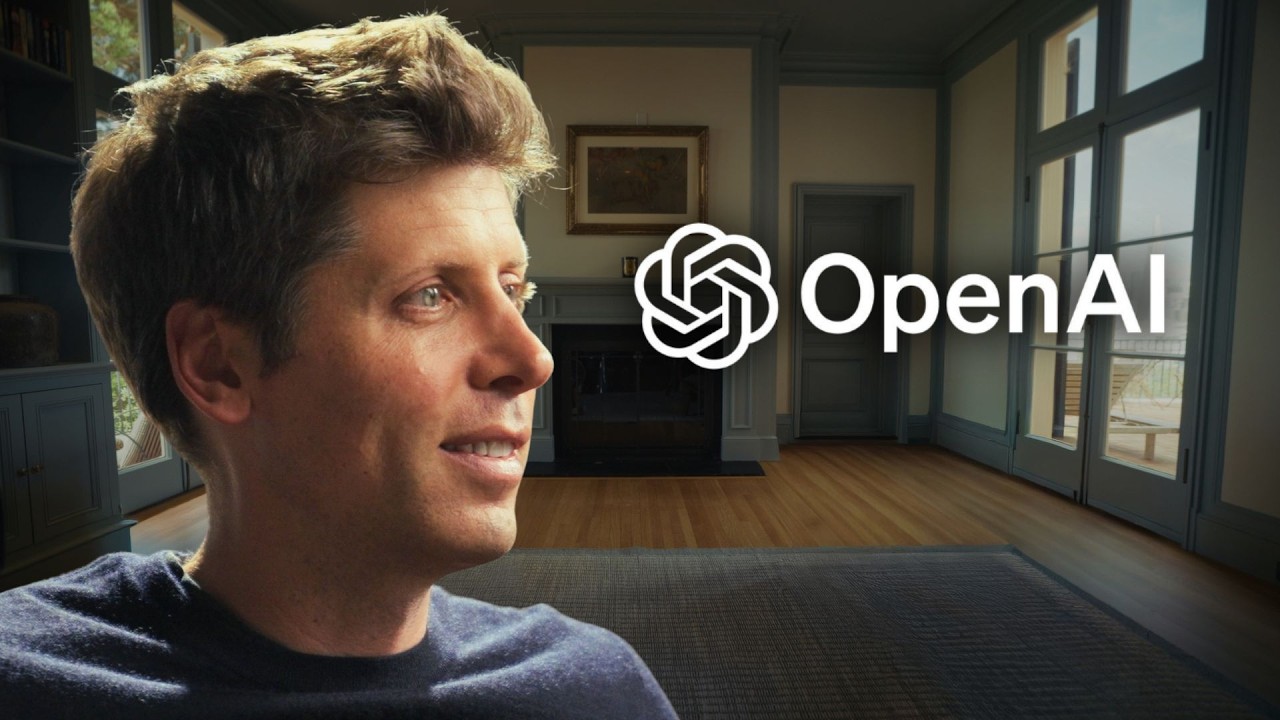
This is Ti Morse’s July 2026 Relentless interview with OpenAI CEO Sam Altman about building startups and operating OpenAI. They discuss AI-era company formation, founder psychology, execution, compute, OpenAI’s evolution, product design, leadership, and durable shifts in user behavior.
How AI changed how to start a startup
Source2:35AI lets small teams build more, faster, and with less capital. Altman says that advantage arrives with a higher bar: customers now expect young companies to produce far more than a similar team could have delivered before.
Technological transitions still favor startups because incumbents have existing products, organizations, and assumptions to defend. The easy AI opportunities may be crowded, but Altman is more interested in founders willing to build ambitious products for the models and costs they expect to exist a few years from now.
Trusting exponentials
Source3:57Altman describes “trusting exponentials” as an operating instinct learned from watching founders, companies, and AI systems progress. A snapshot can look unimpressive while the measured trajectory points somewhere radically different.
Founders should build for that curve, beyond what works at today’s frontier. Altman thinks markets repeatedly underreact to it.
Operating inside chaotic environments
Source5:56Repeated exposure changes how a founder responds to chaos. Early on, a crisis can feel terminal; after enough difficult situations, a founder can remain calm before knowing the answer because experience says an answer can usually be found.
Costly repetitions build the capacity to keep operating while the solution is unclear.
Learning to enjoy painful experiences
Source7:58And I don't know, I find it like fairly easy to be grateful for the bad days.
At YC office hours, Altman watched founders arrive with problems that felt existential. The pattern became familiar: the crisis could be worked through, and the next one would eventually arrive.
He extends the lesson beyond startups. Difficult periods later became experiences he could value because they trained resilience and made better stretches of life more legible.
Creating abundant intelligence
Source10:19OpenAI’s mission creates a chain of problems. Beneficial AGI requires cheap, widely distributed intelligence, which requires enormous physical infrastructure.
Intelligence can generate ideas; energy and robots act on them. Compute, chips, energy, and machines extend the mission.
Keeping core suppliers on OpenAI timelines
Source11:50OpenAI cannot build it alone. Suppliers move faster when they understand the research roadmap, what it could unlock, and why an unusual request matters.
The operating work is active translation: share enough of the model and product trajectory to create conviction, align incentives, and establish joint milestones. Public partnerships with NVIDIA and Foxconn show the same pattern of roadmap co-optimization and multi-generation co-design.
The joint-stock company as a coordination breakthrough
Source14:14Altman treats the joint-stock company as a powerful way to coordinate people beyond family-scale trust.
Legal personality, shares, limited liability, and pooled capital let organizations combine specialized skill, distribute risk, and pursue projects too large for one person. He reads much of modern technological and economic progress through that institutional capacity.
Why the best CEOs are not sociopaths
Source15:55Altman rejects the idea that exceptional CEOs are defined by sociopathy. His positive account is closer to mastery: great operators enjoy improving at a demanding craft and playing a complex strategic game at a very high level.
Incentives can redirect self-interest into coordinated effort without requiring indifferent leaders.
Living inside the singularity
Source17:45Um, but the main thing of what's different than 10 years ago is like we're actually in it.
The singularity feels to Altman like a continuous curve already visible inside the work, not a distant date or sudden break.
OpenAI began in uncertainty and, ten years later, operates at a scale that once seemed implausible. Altman still thinks choices made during this period can determine whether the curve produces a broadly positive world.
AI authoritarianism versus liberty
Source19:08We are going to let society express its ideas and use this technology in the way they want.
Altman acknowledges alignment, safety, employment, and economic disruption, but identifies centralized control as the most immediate political danger. A small number of institutions controlling advanced intelligence could constrain liberty at unprecedented scale.
He wants widely distributed power with guardrails, designing safety and broad access together.
Maintaining hundreds of relationships
Source19:36Hundreds of brief daily interactions give Altman a current view of research, customers, suppliers, and other moving parts.
That information can change a time-sensitive decision when research is about to affect a partner or product. The habit is costly.
Holding a small number of deep beliefs
Source21:27Altman pairs a few durable convictions with aggressive updating everywhere else. The convictions provide direction; current facts determine what the organization should do today.
Because only a small number of beliefs are protected, most plans remain revisable. This lets OpenAI avoid chasing every trend without confusing a long-term destination with a fixed route.
Finding the critical path
Source21:44Critical-path thinking means identifying the constraint that currently governs progress. Hold the destination steady, clear that roadblock, then find the next one.
For Altman, the destination is abundant intelligence that produces widely shared prosperity without concentrated control. The critical path can move from research to compute, energy, product, policy, or supply-chain coordination as each constraint changes.
What comes after superintelligence
Source23:28Um but you know very broadly shared prosperity and uh a real focus on enabling the world here.
Discussing life after superintelligence reflects how close it feels to Altman. Retirement to a ranch remains an eventual idea.
The unfinished work is converting technical capability into abundance, decentralized access, safety, and broadly shared prosperity.
Going everywhere while knowing nothing
Source23:38I've heard you say again and again uh this idea of get on planes in marginal situations.
After GPT-4, OpenAI toured the world because it did not know how governments, institutions, and users would respond. Uncertainty justified going in person.
The tour produced direct learning and was physically punishing. Altman now compresses unavoidable international travel into a bounded period.
Buying compute before the demand was obvious
Source28:42Altman saw underbuying future compute as a larger strategic risk than committing too early. He backed that judgment before the demand case looked obvious to many people around him.
When others disagree, his preferred process is to make the risk explicit and reason through it patiently. He admits urgency has made him more directive, and describes his leadership value less as conviviality than as effectiveness, ambition, and getting people to attempt more than they thought possible.
How ambition expands
Source32:27Ambition grows when people repeatedly attempt goals that feel too large and survive.
Each success expands the next plausible target.
Why Google should not have let OpenAI survive
Source35:35Altman frames OpenAI’s early survival as a competitive puzzle. Google possessed far greater AI talent, compute, and organizational resources, so in ordinary business terms it should have been able to outpace the entrant.
OpenAI paired conviction with talent, then gained enormous leverage from Microsoft’s partnership. It also evolved from research lab to product company and then toward infrastructure at a speed incumbents struggled to match. Altman attributes the opening to organizational inertia and believes the company can still become far larger.
Life after ChatGPT
Source38:17Running a research lab and a mass-market product company felt like different jobs. YC gave him pattern recognition, but not direct preparation.
ChatGPT reached one million users on its fifth day. That growth made the change unavoidable: a quiet research-centered life was replaced almost immediately by the demands of building and operating a global product company.
Chat, coding agents, and persistent coworkers
Source41:42Altman describes chat as the first mass interface for AI and coding agents as the second. Codex’s rapid adoption reflects a shift from asking a model questions to delegating consequential work.
He imagines persistent AI coworkers that understand ongoing context and work across time. This is a forecast, not an announced product.
The Death Star post
Source42:22Shortly before GPT-5, Altman posted an image from a Death Star scene because he found it funny. The timing caused people to interpret it as a major product signal.
OpenAI is introducing technology with an enormous space of possible “wishes,” where outputs can succeed before people understand what follows. A Claude-assisted proof of a Jacobian counterexample is his example: recently implausible intellectual requests can suddenly work.
Status games and useful work
Source45:10AI may make tasks easier, but people will raise their ambitions and keep comparing themselves with others. Status competition moves upward.
He expects more value in actions that express care. A cooked meal matters because someone made it for another person.
The compute mistake he will not repeat
Source48:04I mean, I definitely badly undersshot on the compute investments.
Altman does not want to repeat the error of underbuying compute. He wants coordinated scale across chips, data centers, energy, and manufacturing.
The hard work is aligning the supply chain on compatible timelines.
Execution as a company capability
Source51:24Definitely finding the experts and talking to them, reading as much as I can.
Execution has no single template. Financing a fab, assembling a chip-design team, linking researchers with that team, and establishing a supply chain are distinct problems that demand different actions.
Altman’s method for entering an unfamiliar area is direct: find the best available experts, ask them questions, and read aggressively. He connects that practice to Brian Chesky’s habit of going directly to the strongest source.
Asking directly
Source51:52Sometimes you do. And when you do, amazing things can happen.
Asking creates asymmetric upside. Rejection is common, but an accepted request can unlock an outcome that would otherwise never occur.
OpenAI asked a team to reverse an apparently losing position because coding mattered strategically, and the team accepted. Leaving YC for AI was also a direct choice of work Altman had long wanted to pursue.
OpenAI’s first weeks
Source55:00OpenAI had announced a nonprofit research mission, a founding team, and a commitment to publish. When a group of roughly ten to twelve people gathered in Greg Brockman’s apartment in early January 2016, the practical plan was still unclear.
They got a whiteboard, discussed ideas, and considered writing papers. Altman remembers the fear and says OpenAI took a couple of years to find its groove beyond the broad aim of building AI.
Shutting down good work to focus
Source56:03Focus means stopping good work when another direction compounds faster, then moving people, compute, and attention.
GPT-3 displaced robotics; later, coding agents and Codex displaced the Sora product and standalone browser. The recognition can be gradual, but the decision is painful and discrete. A shared mission helps people accept that a promising project may still be the wrong priority.
Building products with care
Source58:46Like really great design is way more about understanding the problem than the flash of insight.
Ordinary objects exist because someone persisted in making them. Products used at enormous scale deserve deep care.
Altman locates great design in patient understanding of the problem. Premature commitment to a solution narrows exploration and weakens the result. The craft begins with intention and continues through countless small decisions.
What TikTok teaches founders
Source59:41Altman deliberately used TikTok to understand a highly effective consumer product. He found it enjoyable and watched personalization quickly expand the time he spent in the app.
The experience clarified Sora’s different goal: a creation-first social product. Altman disabled notifications and deleted TikTok when it captured too much attention.
Inventing a new device
Source1:01:47Altman describes Jony Ive’s process as exhaustive study followed by relentless refinement. For a car, that can mean researching motorsport history, cabin typography, materials, and the reasons certain engine sounds appealed, then recording the exploration in book-length detail.
Altman cannot explain how deep understanding becomes a novel concept. Design, and perhaps product, are not his strengths, but he believes a leader can recognize an exceptional practitioner without sharing the craft.
Improving strengths instead of fixing weaknesses
Source1:03:00I I am a big believer in you should try to get better at your strengths
Altman favors compounding distinctive strengths. To learn tacit skills, get close enough to excellent practitioners to watch their decisions.
At organizational scale, the same idea informs talent strategy: give fast-moving people responsibility, prefer internal performers whose work is known, and test outsiders through deep references and some form of working contact. He closes by naming the personal cost of a life narrowed to mission and family: irreplaceable time with his children is still passing.
What Masayoshi Son values
Source1:06:14Masayoshi Son is presented as singular in his comfort with enormous scale, long horizons, and uncapped ambition. Altman resists claiming the same profile and calls Son an “n of one.”
Altman sees OpenAI as a compounding capability, not a golden goose producing isolated outputs. Each generation should improve the system that creates the next.
Real trends versus fake trends
Source1:07:11A real platform shift first appears as depth among a small group of users. They return constantly, love the product, and reorganize behavior around it. Hype, purchases, and shallow experimentation are weaker signals.
ChatGPT fits the framework in the interviewer’s daily routine and in cohorts whose use deepens over time. Altman’s closing challenge for startups goes beyond substituting a Codex bill for some hires. The larger opportunity is to redesign the company around delegated, parallel machine work instead of preserving the old organization with a new tool attached.
Tags
- Compute Supply Chain
- Coding Agents
- Startup Infrastructure