

NVIDIA’s Central Bank of AI

- AI Infrastructure, Compute, Chips, And Energy
- Capital, Markets, And Business Models

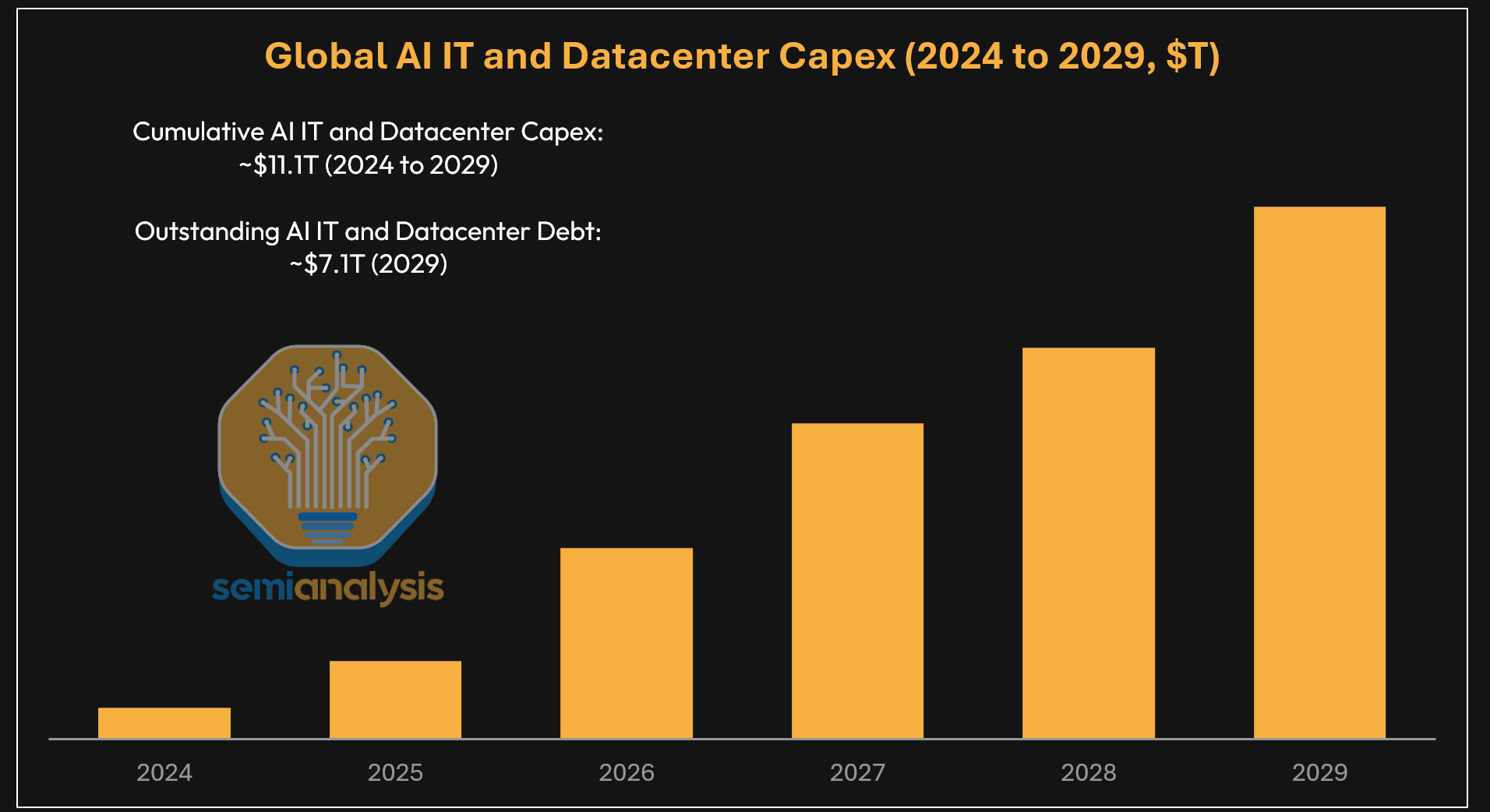
So AI debt financing including data center and GPU IT capex again what we said is going to reach 7 trillion uh by 2029.
Audio recap
Listen to this recap
This is a SemiAnalysis Weekly panel with Jordan Nanos, Dan Nishball, Zane Fong, and Kang Wen Cheang about financing AI infrastructure. It covers the capital–offtake–data-center trinity, NVIDIA’s GPU debt backstops, neocloud lending, and the token economics beneath the buildout.
The $11 trillion funding problem
Source3:17SemiAnalysis forecasts $11 trillion of AI and data-center spending from 2024 through 2029. About $7.1 trillion would need financing, with roughly 75% of the buildout funded by debt.
Capital, offtake, and data-center capacity depend on each other. Lenders want a long-term investment-grade customer. Customers want proof that the operator can deliver. Data-center operators want financing and customers in place.
A five-year hyperscaler contract can unlock asset-level debt. CoreWeave used this structure at scale. Hyperscaler balance sheets cannot support every projected project, and five-year contracts do not serve customers seeking one or two years of compute.
The startup duration mismatch
Source9:41and they really want the biggest cluster they can get for about 6 months to a year.
Model startups often want one large training run lasting six to twelve months. They train, show progress, raise again, and scale.
Neocloud lenders want five years of contracted cash flow. The episode turns an $80 million one-year budget into $15 million to $20 million annually for five years. That gives the startup a much smaller immediate cluster. The operator still avoids buying $1 billion of GPUs against uncertain future funding rounds.
NVIDIA’s backstop targets this gap.
How the backstop works
Source11:43SemiAnalysis models a six-year GB300 arrangement. NVIDIA agrees to buy compute at a pre-set floor that falls with expected rental prices. The neocloud keeps revenue through the floor. NVIDIA shares rental revenue above it.
The modeled floor averages $2.36 per GPU-hour. It gives lenders a downside cash flow; it does not promise the operator a strong return. The operator should build a broad customer book and avoid using the backstop.
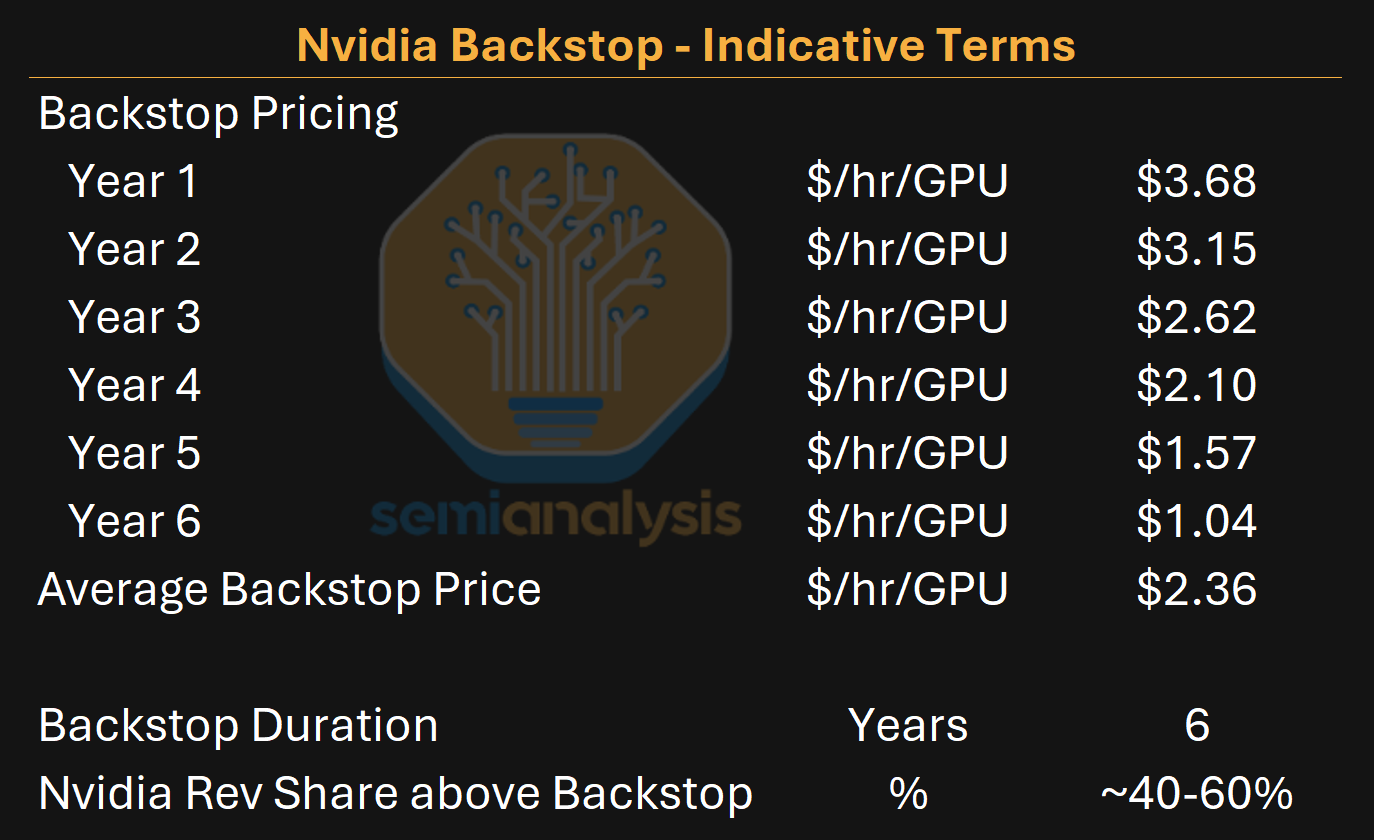
The episode says lenders want debt-service coverage above 1.3 in the early years. They can size the loan against NVIDIA’s floor and investment-grade credit.
If NVIDIA took the compute, the speakers say it could use it for research, ecosystem engineering, model development, or other customers.
The central bank of AI
Source20:46SemiAnalysis calls NVIDIA the central bank of AI because it supplies support where private credit cannot. NVIDIA is also backing data-center leases and other parts of the trinity.
The speakers say NVIDIA actively picks winners. It favors operators it trusts and companies buying deeply into its platform. The backstop finances projects and shapes the market.
NVIDIA’s bullseye
Source23:36The outer ring buys GPUs once. Repeat neoclouds move inward by buying successive generations. NVIDIA Cloud Partners adopt more NVIDIA networking, software, reference architectures, and operating standards.
The backstopped partner sits at the center. NVIDIA helps finance the project, the operator buys the wider platform, and NVIDIA shares cloud revenue above the floor.
Many operators want this support. NVIDIA can grant it to only a subset.
How lenders price GPU debt
Source31:53Loan pricing starts with the customer behind the offtake. Lenders add neocloud execution risk, then platform risk when they move from a ring-fenced project to the wider company.
CoreWeave’s DDTL 4.0 was secured by project assets, linked to a customer contract, and priced at SOFR plus 225 basis points. Unsecured neocloud bonds expose lenders to the whole company and price differently.
NVIDIA-backed projects give lenders an investment-grade floor while they learn to evaluate operator performance and customer books. Successful neoclouds may later borrow as standalone platforms.
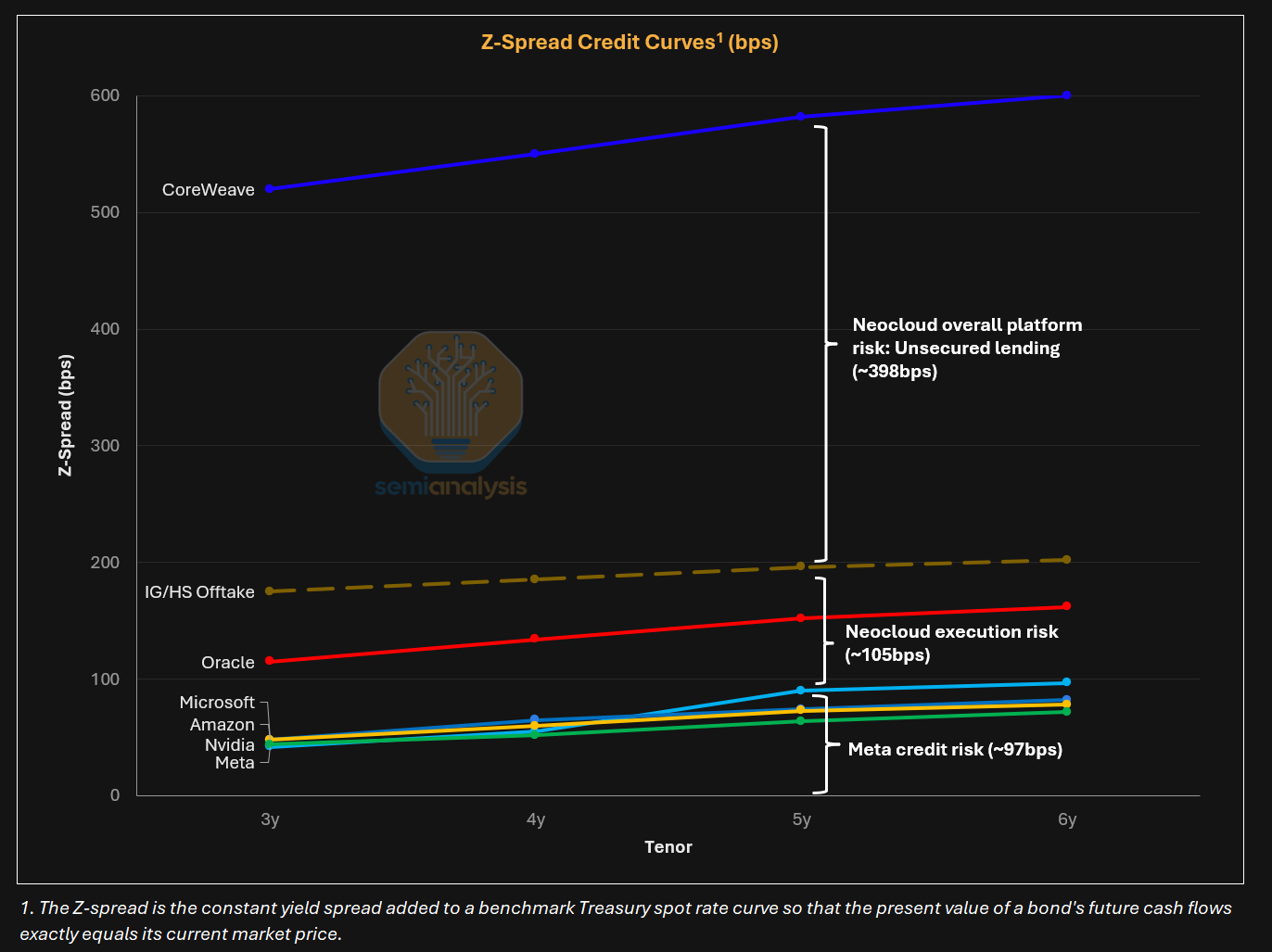
The speakers compare this with financing factories and other long-lived assets. A vacant 200-megawatt GPU cluster is harder to recover because the accelerators depreciate quickly.
Asia-Pacific projects
Source39:31Sharon AI announced a six-year NVIDIA-backed collaboration for a new 72-megawatt Australian AI factory. It targets a 132-megawatt footprint, 102 megawatts contracted, and more than 55,000 NVIDIA GPUs by mid-2027.
Firmus moved from Singapore infrastructure with ST Telemedia Global Data Centres to Australian projects and a planned 360-megawatt Batam campus with DayOne for as many as 170,000 accelerators.
Both projects combine GPU commitments, power, facilities, customers, capital, and backstops in different orders. Banks still need rental-price data and evidence that the operator can deliver.
The diligence layer
Source44:07People who offer managed slur and managed Kubernetes and people that don't.
ClusterMAX tests the operating quality hidden behind a GPU price. It covers reliability, networking, orchestration, storage, monitoring, security, pricing, partnerships, and availability.
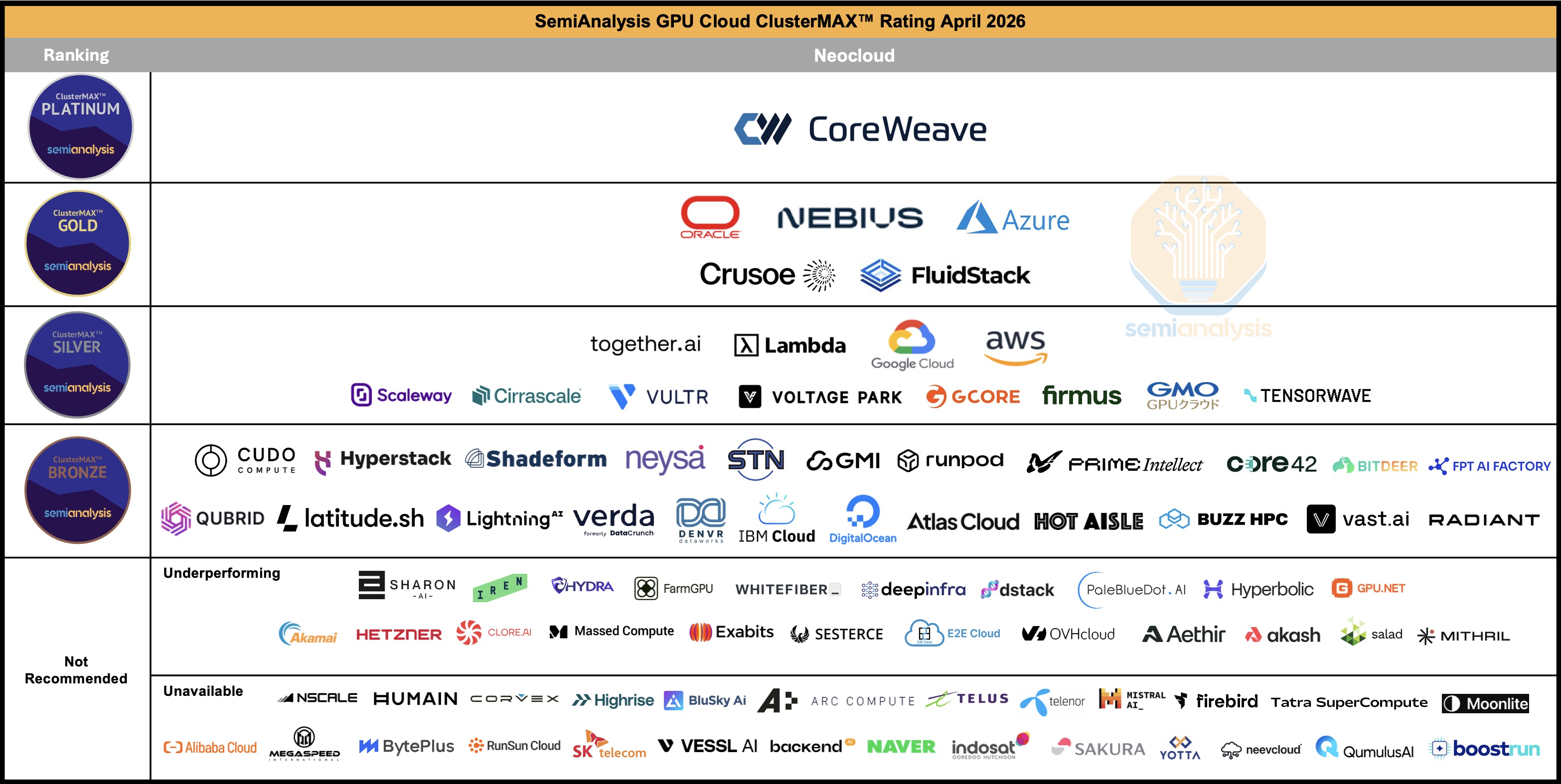
A price page cannot show whether a large cluster stays online, health checks work, managed Slurm or Kubernetes is ready, or an SLA has substance. These differences matter when customers commit tens of millions of dollars and lenders finance the same equipment.
Reliable operators can charge more, win prepayments, and secure larger contracts. Technical diligence and contract design become part of GPU finance.
Tokens complete the loop
Source51:17Inference is a means to buy more GPUs to train the next mod.
InferenceX measures token throughput per GPU. Apply a token price and the result becomes a revenue-capacity model. Inference customers buy tokens; some training customers rent GPU-hours.
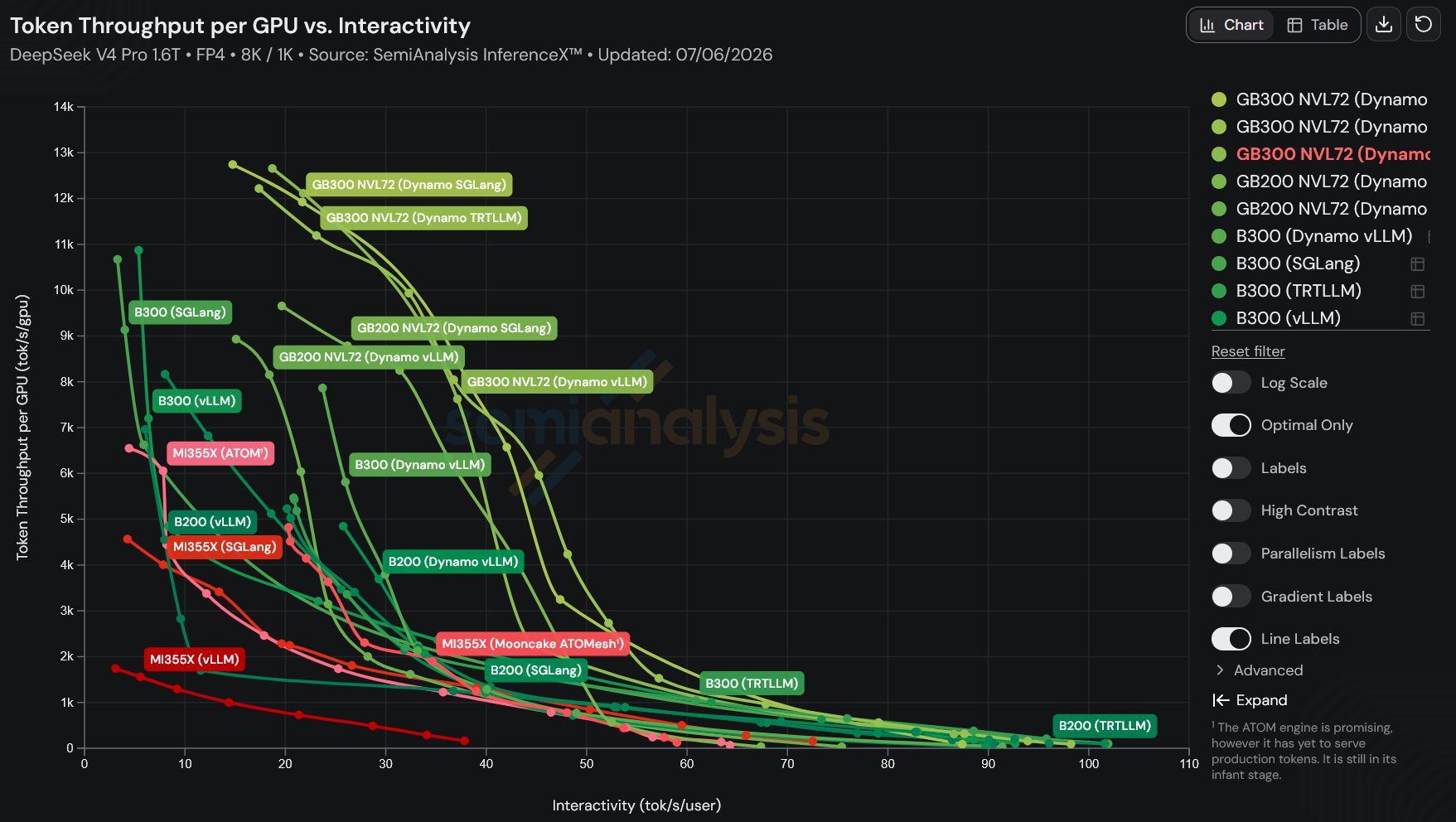
The speakers reject the idea that inference growth ends training. Frontier labs train better models, inference creates usage and revenue, and that revenue funds more compute and the next training run.
Capital finances GPUs and data centers. Offtake and backstops make the debt bankable. Operators deliver compute. Training creates models. Inference sells tokens and funds the next cycle.
Tags
- AI Infrastructure
- AI Capital Allocation
- Cloud Economics
- Data Centers And Energy