

AI's growth boom still has to pass through the weak links
Software is about 2% of GDP. If we had infinite software, we'd be 2% richer.
Watch the recap video here
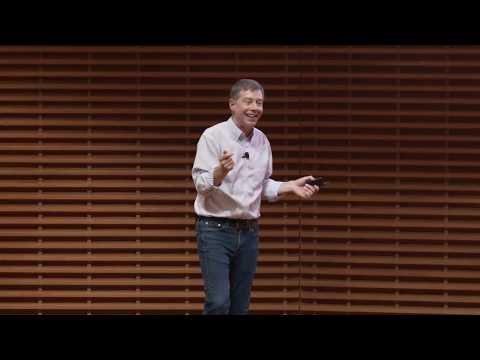
Context
Economic value flows to the weak links left after AI makes one input abundant, so institutions and bottleneck tasks become the live scarcity map.
Big Ideas
- The allocative crux is weak-link scarcity: if AI makes one task abundant, the premium shifts to the next bottleneck instead of automatically delivering economy-wide abundance.
- Jones is not dismissing AI acceleration. He says even conservative simulations eventually explode, but the timeline changes from "sudden takeoff" to a decades-long process of automating successive bottlenecks.
- The risk asymmetry matters for operators and policymakers: weak-link systems can take a long time to improve, yet fail quickly if AI helps a bad actor attack software, finance, energy, or biosecurity.
Supporting Context And Sources
- Stanford Graduate School of Business is the official publisher of the video, with the episode page hosted on YouTube: "A.I. and Our Economic Future," Professor Chad Jones.
- Jones's official Stanford slide deck for the talk gives the same framing: "AI accelerates automation" versus "AI is just business as usual," then introduces weak links as the reason growth can be transformative but slow: A.I. and Our Economic Future slides.
- The underlying research program appears connected to Jones and Christopher Tonetti's paper on automation and AI, which formalizes the weak-link mechanism and the software thought experiment: Past Automation and Future A.I..
- A Princeton Bendheim Center for Finance event description of Jones's related work frames the same question as whether rapid automation and artificial intelligence will lead to "explosive economic growth," reinforcing that the talk is part of an active academic growth-economics debate: Princeton BCF event page.
- Tyler Cowen at Marginal Revolution highlighted Jones and Tonetti's model under the headline "A new economic growth model for AGI," signaling interest from growth-minded economists and investors in the weak-link approach: Marginal Revolution.
- Stanford SIEPR's profile of Jones describes his broader research as focused on why some countries are richer and how long-run growth works, useful context for reading this talk as growth economics rather than AI product commentary: Stanford SIEPR profile.
Full Recap
00:00-02:27 - Setup: two futures for AI growth - Jones frames AI as potentially the most transformative technology of the current lifetime, but explicitly places it in the same historical line as electricity, semiconductors, information technology, and the internet (00:00:39-00:01:11). - He sets up two extremes: a Silicon Valley "FOOM" scenario where AI dramatically accelerates growth, and a "business as usual" scenario where AI is transformative but still leaves measured growth near the historical trend (00:01:58-00:02:26).
02:42-06:43 - The explosive-growth case - The acceleration case starts with AI automating software engineering, then using those software agents to improve AI research, automate more computer work, and eventually scale into "billions of virtual research assistants" running on GPUs (00:02:42-00:04:48). - Jones argues that once cognitive tasks and physical tasks are both automated, standard growth models can produce explosive growth, but he also says the horizon could be three, five, or 25 years rather than guaranteed immediacy (00:05:27-00:06:33).
06:47-10:49 - The business-as-usual counterweight - The historical counterexample is 150 years of U.S. living standards rising around 2 percent per year despite electricity, internal combustion engines, antibiotics, transistors, semiconductors, computers, and the internet (00:06:47-00:08:18). - His interpretation is not that those technologies failed. It is that each one may have prevented growth from slowing as older idea classes became harder to improve (00:08:39-00:09:19). - He emphasizes that big technologies often require decades of complementary innovation and reorganization, using the shift from steam to electric factories and the later diffusion of spreadsheets, word processors, databases, and SQL as examples (00:09:47-00:10:48).
10:51-14:36 - Weak links as the source of scarcity - Jones introduces weak links as the bridge between the two scenarios: businesses create value only when many tasks succeed together, so strengthening most links can still leave the chain constrained by the few tasks that remain fragile (00:10:51-00:12:57). - He uses the iPhone supply chain, the Challenger O-ring, ASML, and TSMC as concrete examples of systems where a tiny failure can destroy much larger value (00:11:22-00:12:37). - The core allocation point is explicit: "weak links are the source of scarcity," and scarcity is what produces high returns (00:14:06-00:14:34).
14:38-17:44 - Why computers did not take over GDP - Jones says economists focus on who gets GDP, noting the historical two-thirds labor and one-third capital split, with labor's share falling by about 10 percent over the past 25 years (00:14:38-00:15:32). - He then breaks capital into components and asks how much GDP is paid as a return to computing power. His answer: the computer share peaked around the 2000 dot-com boom at just under 4.5 percent and later fell to about 3 percent (00:15:34-00:17:02). - His weak-link reading is that computers became abundant while other bottlenecks, including humans, remained scarce (00:17:02-00:17:42).
17:45-20:38 - The model: ideas, automation, and the infinite-software result - Jones describes a model where ideas drive long-run growth, goods and idea production both contain weak links, and automation gradually removes those weak links over time (00:17:45-00:18:45). - The sharpest thought experiment is software: if software were pushed to infinity, GDP rises only by software's share of GDP, about 2 percent, because every other weak link still constrains production (00:19:13-00:20:22). - He says that result means automating one task very well is not enough; the dynamic question is whether AI keeps finding and automating the next binding weak link (00:20:22-00:20:36).
20:38-30:03 - Simulations: explosion, but timing depends on weak links - The model combines two forces: an automation flywheel that wants to explode and weak links that make partial automation insufficient (00:20:38-00:21:20). - In a continuation-of-history scenario, growth eventually accelerates strongly, but slowly: by 2050 the model moves from 2 percent to about 2.3 percent growth, with income per person only about 4 percent above the old trend line (00:24:59-00:27:17). - In a more aggressive "Moore's Law everywhere" scenario, growth rises much faster, but Jones still says the explosion takes about 30 years, not four or five, because weak links slow the system (00:28:36-00:29:53). - He summarizes the tension by saying his career was built on the 2 percent historical growth line, yet all of his AI scenarios now point toward growth exploding over the next 50 or 100 years, only more slowly than the word "explosion" suggests (00:30:06-00:30:49).
31:07-36:35 - Jobs, wages, meaning, and redistribution - Jones uses Geoff Hinton's 2016 radiologist prediction to argue that jobs are bundles of tasks: AI can automate many subtasks while leaving scarce human tasks more valuable, as with radiologists consulting, double-checking, and coordinating care (00:31:31-00:33:05). - He contrasts that with Uber drivers, where self-driving cars may automate nearly the whole job, while also noting that Waymo took far longer to diffuse than early autonomous-vehicle forecasts implied (00:33:05-00:34:47). - His optimistic distribution case is that AI-driven abundance creates room for redistribution, but he explicitly compares that hope to economists' claims about trade before the China shock and says better outcomes do not happen automatically (00:34:47-00:35:25). - On meaning, Jones worries that future models may write better growth papers than he does, then analogizes a post-work world to retirement or summer camp rather than necessarily to despair (00:35:30-00:36:35).
36:35-41:56 - The downside can arrive before the productivity boom - Jones says he is "very nervous" about catastrophic risks, separating bad-actor misuse from a more speculative alien-intelligence alignment problem (00:36:35-00:38:54). - He applies the weak-link framework to risk: weak-link systems improve slowly, but they are fragile on the downside because breaking one link can destroy much of the value (00:39:07-00:39:40). - He says a model that finds old software bugs, or a future open-source equivalent, could create near-term cyber, financial, grid, or biosecurity risks before the full productivity benefits arrive (00:39:39-00:40:55). - His closing frame is that AI may be worth "multiple internets" between 2015 and 2045, but the effects may take 30 years rather than five, while downside risks can come sooner (00:40:59-00:41:56).
42:31-01:00:08 - Q&A: mismeasurement, labor shocks, concentration, and global gaps - On GDP mismeasurement, Jones agrees that free AI services may create uncaptured value, but says historical gains such as antibiotics and life expectancy were also badly captured, so the key question is whether mismeasurement gets worse over time (00:42:31-00:44:13). - Asked about short-term labor disruption, he says the follow-up paper is exactly about that question and returns to radiologists, Waymo, and software engineers as examples where weak links can keep humans in the loop longer than expected (00:44:21-00:46:55). - On services, he says manufacturing has historically been easier to automate, while care work, kindergarten teaching, and other human-facing services look more like weak links that may take longer to automate (00:48:52-00:50:44). - On capital concentration, he says AI may first hit high-skilled cognitive labor, while electricians and plumbers could gain in the short term; he adds that people who own equities may capture some capital income, but people without shares remain a major concern (00:51:28-00:53:02). - Asked where young people should seek high returns, Jones says management and human decision oversight may remain valuable because organizations may not want unchecked AI decision-making (00:53:06-00:54:47). - On global inequality, he says the U.S. and countries owning AI companies may be fine in abundance, while developing countries without claims on the S&P 500 are a much less studied and potentially severe problem (00:54:52-00:55:45). - The final question challenges whether the model assumes too much gradualism. Jones concedes calibration of weak-link strength is a key uncertainty, but says the Waymo delay still makes him "pretty sure" the full transition will not happen in five years (00:57:30-01:00:04).
00:00-02:27 - Setup: two futures for AI growth
- 00:00:39-00:01:11 - Jones frames AI as potentially the most transformative technology of the current lifetime, but explicitly places it in the same historical line as electricity, semiconductors, information technology, and the internet .
- 00:01:58-00:02:26 - He sets up two extremes: a Silicon Valley "FOOM" scenario where AI dramatically accelerates growth, and a "business as usual" scenario where AI is transformative but still leaves measured growth near the historical trend .
02:42-06:43 - The explosive-growth case
- 00:02:42-00:04:48 - The acceleration case starts with AI automating software engineering, then using those software agents to improve AI research, automate more computer work, and eventually scale into "billions of virtual research assistants" running on GPUs .
- 00:05:27-00:06:33 - Jones argues that once cognitive tasks and physical tasks are both automated, standard growth models can produce explosive growth, but he also says the horizon could be three, five, or 25 years rather than guaranteed immediacy .
06:47-10:49 - The business-as-usual counterweight
- 00:06:47-00:08:18 - The historical counterexample is 150 years of U.S. living standards rising around 2 percent per year despite electricity, internal combustion engines, antibiotics, transistors, semiconductors, computers, and the internet .
- 00:08:39-00:09:19 - His interpretation is not that those technologies failed. It is that each one may have prevented growth from slowing as older idea classes became harder to improve .
- 00:09:47-00:10:48 - He emphasizes that big technologies often require decades of complementary innovation and reorganization, using the shift from steam to electric factories and the later diffusion of spreadsheets, word processors, databases, and SQL as examples .
10:51-14:36 - Weak links as the source of scarcity
- 00:10:51-00:12:57 - Jones introduces weak links as the bridge between the two scenarios: businesses create value only when many tasks succeed together, so strengthening most links can still leave the chain constrained by the few tasks that remain fragile .
- 00:11:22-00:12:37 - He uses the iPhone supply chain, the Challenger O-ring, ASML, and TSMC as concrete examples of systems where a tiny failure can destroy much larger value .
- 00:14:06-00:14:34 - The core allocation point is explicit: "weak links are the source of scarcity," and scarcity is what produces high returns .
14:38-17:44 - Why computers did not take over GDP
- 00:14:38-00:15:32 - Jones says economists focus on who gets GDP, noting the historical two-thirds labor and one-third capital split, with labor's share falling by about 10 percent over the past 25 years .
- 00:15:34-00:17:02 - He then breaks capital into components and asks how much GDP is paid as a return to computing power. His answer: the computer share peaked around the 2000 dot-com boom at just under 4.5 percent and later fell to about 3 percent .
- 00:17:02-00:17:42 - His weak-link reading is that computers became abundant while other bottlenecks, including humans, remained scarce .
17:45-20:38 - The model: ideas, automation, and the infinite-software result
- 00:17:45-00:18:45 - Jones describes a model where ideas drive long-run growth, goods and idea production both contain weak links, and automation gradually removes those weak links over time .
- 00:19:13-00:20:22 - The sharpest thought experiment is software: if software were pushed to infinity, GDP rises only by software's share of GDP, about 2 percent, because every other weak link still constrains production .
- 00:20:22-00:20:36 - He says that result means automating one task very well is not enough; the dynamic question is whether AI keeps finding and automating the next binding weak link .
20:38-30:03 - Simulations: explosion, but timing depends on weak links
- 00:20:38-00:21:20 - The model combines two forces: an automation flywheel that wants to explode and weak links that make partial automation insufficient .
- 00:24:59-00:27:17 - In a continuation-of-history scenario, growth eventually accelerates strongly, but slowly: by 2050 the model moves from 2 percent to about 2.3 percent growth, with income per person only about 4 percent above the old trend line .
- 00:28:36-00:29:53 - In a more aggressive "Moore's Law everywhere" scenario, growth rises much faster, but Jones still says the explosion takes about 30 years, not four or five, because weak links slow the system .
- 00:30:06-00:30:49 - He summarizes the tension by saying his career was built on the 2 percent historical growth line, yet all of his AI scenarios now point toward growth exploding over the next 50 or 100 years, only more slowly than the word "explosion" suggests .
31:07-36:35 - Jobs, wages, meaning, and redistribution
- 00:31:31-00:33:05 - Jones uses Geoff Hinton's 2016 radiologist prediction to argue that jobs are bundles of tasks: AI can automate many subtasks while leaving scarce human tasks more valuable, as with radiologists consulting, double-checking, and coordinating care .
- 00:33:05-00:34:47 - He contrasts that with Uber drivers, where self-driving cars may automate nearly the whole job, while also noting that Waymo took far longer to diffuse than early autonomous-vehicle forecasts implied .
- 00:34:47-00:35:25 - His optimistic distribution case is that AI-driven abundance creates room for redistribution, but he explicitly compares that hope to economists' claims about trade before the China shock and says better outcomes do not happen automatically .
- 00:35:30-00:36:35 - On meaning, Jones worries that future models may write better growth papers than he does, then analogizes a post-work world to retirement or summer camp rather than necessarily to despair .
36:35-41:56 - The downside can arrive before the productivity boom
- 00:36:35-00:38:54 - Jones says he is "very nervous" about catastrophic risks, separating bad-actor misuse from a more speculative alien-intelligence alignment problem .
- 00:39:07-00:39:40 - He applies the weak-link framework to risk: weak-link systems improve slowly, but they are fragile on the downside because breaking one link can destroy much of the value .
- 00:39:39-00:40:55 - He says a model that finds old software bugs, or a future open-source equivalent, could create near-term cyber, financial, grid, or biosecurity risks before the full productivity benefits arrive .
- 00:40:59-00:41:56 - His closing frame is that AI may be worth "multiple internets" between 2015 and 2045, but the effects may take 30 years rather than five, while downside risks can come sooner .
42:31-01:00:08 - Q&A: mismeasurement, labor shocks, concentration, and global gaps
- 00:42:31-00:44:13 - On GDP mismeasurement, Jones agrees that free AI services may create uncaptured value, but says historical gains such as antibiotics and life expectancy were also badly captured, so the key question is whether mismeasurement gets worse over time .
- 00:44:21-00:46:55 - Asked about short-term labor disruption, he says the follow-up paper is exactly about that question and returns to radiologists, Waymo, and software engineers as examples where weak links can keep humans in the loop longer than expected .
- 00:48:52-00:50:44 - On services, he says manufacturing has historically been easier to automate, while care work, kindergarten teaching, and other human-facing services look more like weak links that may take longer to automate .
- 00:51:28-00:53:02 - On capital concentration, he says AI may first hit high-skilled cognitive labor, while electricians and plumbers could gain in the short term; he adds that people who own equities may capture some capital income, but people without shares remain a major concern .
- 00:53:06-00:54:47 - Asked where young people should seek high returns, Jones says management and human decision oversight may remain valuable because organizations may not want unchecked AI decision-making .
- 00:54:52-00:55:45 - On global inequality, he says the U.S. and countries owning AI companies may be fine in abundance, while developing countries without claims on the S&P 500 are a much less studied and potentially severe problem .
- 00:57:30-01:00:04 - The final question challenges whether the model assumes too much gradualism. Jones concedes calibration of weak-link strength is a key uncertainty, but says the Waymo delay still makes him "pretty sure" the full transition will not happen in five years .
Technical Need To Knows
- Weak-link model: A production model where the total output of a system is constrained by its weakest required task. Jones uses it to explain why huge gains in one input, such as software or compute, may not translate into equally huge GDP gains until other bottlenecks are solved (00:10:51-00:14:36).
- Scarcity and factor returns: In economics, scarce inputs command high returns. Jones's allocation thesis is that the scarce factor after AI adoption may be the remaining weak link: human judgment, physical deployment, safety validation, services, capital ownership, or institutional trust (00:14:06-00:14:34).
- FOOM: A shorthand for a fast AI takeoff in which AI improves AI, which then accelerates further improvement. Jones treats this as one plausible extreme, not as his baseline certainty (00:01:58-00:06:33).
- AI agents and virtual remote workers: Software systems that can carry out extended computer-based work. Jones says if agents can do what software engineers do, they can be applied to AI research and other digital tasks, creating a feedback loop (00:03:45-00:04:32).
- GPUs: Specialized chips used heavily for AI training and inference. Jones's "billions of virtual research assistants" scenario depends on scaling AI agents across large GPU fleets (00:04:32-00:04:48).
- Moore's Law: The historical rapid improvement of computing performance. Jones uses a deliberately aggressive scenario where the whole economy starts improving at a Moore's Law-like rate, then notes that observed growth since 2020 has not matched that assumption (00:22:18-00:23:04 and 00:28:03-00:29:10).
- Labor share and capital share: The portions of GDP paid to workers and to owners of capital. Jones says labor historically received about two-thirds and capital about one-third, but labor's share has fallen by roughly 10 percent in the past 25 years (00:14:38-00:15:32).
- Computer factor share: The share of GDP paid as a return to computing power. Jones says it peaked around 2000 below 4.5 percent and later fell to about 3 percent, which he reads as evidence that abundant computers do not automatically capture more GDP (00:15:34-00:17:42).
- Paul Romer's ideas-based growth theory: The growth framework where new ideas drive long-run increases in living standards. Jones says his model keeps ideas as the source of long-run growth while adding weak links and endogenous automation (00:17:45-00:18:45).
- Endogenous automation: Automation that advances inside the model as better machines and ideas are invented, instead of being imposed from outside. This is crucial because Jones says one-time automation of software is not enough; the economy needs repeated automation of the next bottleneck (00:18:13-00:20:36).
- Complementary innovation: The additional process, organizational, and product changes needed before a technology transforms production. Jones uses factory electrification and information technology tools such as spreadsheets, word processors, databases, and SQL to explain why adoption takes decades (00:09:47-00:10:31).
- ASML and TSMC: Critical firms in the semiconductor manufacturing chain. Jones uses them as examples of systems with extreme precision requirements where a small failure can break the output (00:12:20-00:12:37).
- Waymo and autonomous vehicles: Jones uses Waymo as evidence that seemingly narrow AI-plus-robotics problems can take decades to diffuse in the physical world, reinforcing his weak-link timing argument (00:33:05-00:34:47 and 00:59:10-01:00:04).
- Radiologists as task bundles: Jones argues radiology shows how automating some subtasks can raise human productivity and wages if remaining tasks stay scarce, such as consultation, hard-case review, and clinical coordination (00:31:31-00:33:05).
- Catastrophic risk and bad-actor misuse: Jones separates long-run growth from near-term fragility. His concern is that AI-enabled cyber or bio misuse could break critical weak links before society captures the full economic upside (00:36:35-00:40:55).