

Rich Sutton on Continual Learning, the Bitter Lesson, and Oak
Audio deep dive
Listen to this deep dive
IntroductionSection 01
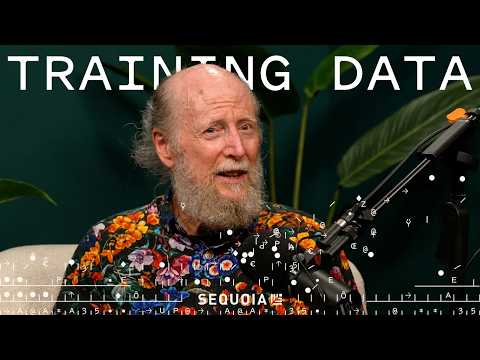
In this video conversation, reinforcement-learning researcher Rich Sutton joins Oak co-founder Khurram Javed to explain why learning should continue throughout an agent's life. Sutton's Bitter Lesson favors general methods that improve with computation, but both speakers argue that static training and synthetic data cannot capture an open-ended world. They trace the missing pieces from experience and abstraction to catastrophic forgetting. The discussion ends with the Alberta Plan and Oak's attempt to build a coherent mind that keeps changing without losing what it already knows.
Sutton Says the Bitter Lesson Favors Methods That ScaleSection 02
Sutton describes the Bitter Lesson as a warning against building intelligence from hand-coded human knowledge. Learning and search methods have repeatedly won because they keep improving as computation grows, though he questions whether finite human-generated data can support that path indefinitely.
- Decades of AI experiments show knowledge-heavy systems losing to more general methods.
- Sutton identifies learning and search as the central methods that benefit from additional computation.
- Large language models demonstrate successful scaling but may eventually run into the finite supply of human data.
Sutton and Javed Say Synthetic Data Cannot Contain a Big WorldSection 03
Fixed datasets and simulations are built without all the detail that Sutton and Javed include in the real world. Synthetic data still reflects human decisions about what to model, so an agent ultimately needs its own stream of experience.
- The big world hypothesis requires an agent to face new things throughout its life.
- Human experts remain responsible for deciding which synthetic examples are useful for difficult tasks.
- A simulation uses a smaller model that cannot include every physical detail or other mind.
Deployed Models Must Keep Learning From Their Own ExperienceSection 04
The speakers distinguish storing context from changing what a model has learned. They argue that useful agents must adapt after deployment, form abstractions from experience, and use those abstractions for planning rather than relying only on periodic shared updates.
- Prior knowledge and ongoing learning can support each other instead of being treated as competing approaches.
- An intelligent assistant should become better through use rather than stop learning when it is deployed.
- Learning from an individual stream of experience differs from applying a shared batch update to every copy of a model.
- Current systems still struggle to learn world models, create new abstractions, and plan with them at the edge of knowledge.
The Alberta Plan Targets Abstraction Without Catastrophic ForgettingSection 05
The Alberta Plan uses twelve steps to keep a learned world model current, discover useful abstractions, and prevent new experience from erasing old knowledge. Adaptive step sizes and newly initialized units are possible mechanisms, while the full result remains an open research goal.
- Continual deep learning uses new experience to update an agent's world model.
- Each agent requires abstractions suited to its own experience; no fixed set can suit every world.
- Naive updates from one stream can destroy useful knowledge acquired earlier.
- Adaptive step sizes and continual backpropagation are proposed routes rather than demonstrated solutions to the full problem.
Oak Is Building a Self-Maintaining Mind With One Reusable DesignSection 06
Oak's founders want one design that can produce many minds, each learning from its own experience across low-level details and high-level plans. They acknowledge present hardware limits and say a small, aligned team is better placed to pursue a paradigm that may initially underperform conventional scaling.
- Oak aims to handle detailed experience and large abstractions within one coherent learning system.
- The proposed mind would change while maintaining its own organization instead of depending on a frozen model and post-training maintenance.
- The founders' long-term efficiency target is not possible with current memory technology.
- Many minds could share one design while learning different things from different environments.
Claims & connections

Sutton says deployed intelligent systems must continue learning
ClaimRich Sutton says an intelligent system must continue learning from its own experience after deployment rather than merely interact with fixed weights.
Rich Sutton on Continual Learning, the Bitter Lesson, and OakJaved says naive single-stream updates cause catastrophic forgetting
ClaimKhurram Javed says naively updating a model from a single stream of experience can destroy knowledge learned earlier through catastrophic forgetting.
Rich Sutton on Continual Learning, the Bitter Lesson, and OakSutton says AI should favor learning methods that scale with computation
ClaimRich Sutton says AI should favor learning and search methods that improve with computation over systems built primarily from hand-coded human knowledge.
Rich Sutton on Continual Learning, the Bitter Lesson, and Oak